Sunday, 11 December 2011

Day 167 8 Dec Thur VARANASI

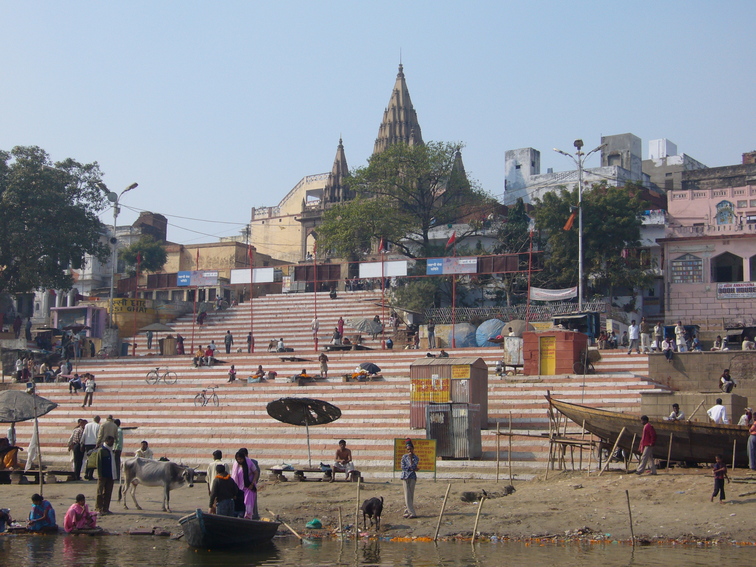
Varanasi, situated on the banks of the River Ganges and regarded as a holy city by Hindus, Buddhists and Jains. It is one of the oldest continuously inhabited cities in the world and probably the oldest in India. According to legend, the city was founded by the Hindu deity Lord Shiva, several thousand years ago, thus making it one of the most important pilgrimage destinations in the country and one of the holiest places in India, where  pilgrims come to wash away a lifetime of sins in the Ganges or to cremate their loved ones. Varanasi, previously named Benares and Kashi (City of Light) – it was renamed after the Varuna and Asi Rivers, which meet here – has always been an auspicious place to die, since expiring here offers moksha (liberation from the cycle of birth and death). The city also has a sizeable native Muslim population, it hosts the Roman Catholic Diocese of Varanasi, and has a significant Jewish expatriate community. Varanasi is home to numerous tribal faiths which are not easily classified and many denomination of the religions which are present.


Varanasi's "Old City, " the quarter near the banks of the Ganges, has crowded narrow winding lanes that are flanked by road-side shops and scores of Hindu temples. As atmospheric as it is confusing, Varanasi's labyrinthine Old City is rich with culture, and a deservedly popular destination for travellers and tourists alike.

 
Varanasi has nearly 100 ghats. Many of the ghats were built when the city was under Maratha control.  Most are bathing ghats, while others are used as cremation sites (we see one of the smallest at a discreet and respectful distance - only stopping to marvel at the huge piles of wood stacked along the top of the ghat and the  enormous scales used to weigh each log so that the precise cost of cremation can be calculated - each type of wood has it's own price and sandalwood is the most expensive. Most ghats are associated with legends or mythologies while many ghats are now privately owned. All are fascinating places to "people watch" and are again a surreal mix of those who have come to the Ganges for a ritual bath, wash clothes, do yoga, offer blessings, sell flowers, wash their buffaloes, play cricket, improve their karma by giving to beggars or just to hang around. All of which we witness as we wander along the ghats from Assi Ghat to Dasawarmedh Ghat - the liveliest and most colourful.  It is possible to do this for most of the year apart from during the monsoon when the waters rise and cover the steps.


In the evening we get a different perspective as we board a small row boat  and head back towards Dasawarmedh to watch the (nightly) 'ganga aarti' (river worship)ceremony - an elaborate ritual display with puja (literally - respect, offering or prayers), fire and dance. 
 
The river is amazingly quiet as we drift downstream towards the bright lights and ferociously loud music at the main ghat. Here we are one of many little craft and the crowds onboard some of the larger boats look quite unsafe. 
We buy some floating candle and flower lights and each make our own prayer and wish before setting them adrift to join the hundreds of others already making their journey on the sacred Ganges. 


Saturday, 10 December 2011

Day 166 7 Dec Wed VARANASI


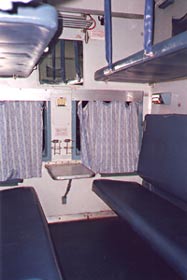
It is a grey, foggy,cold morning at 5am! We are all exhausted, cold and hungry as we arrive in Varanasi. The quality of sleep on trains in India is very poor - largely as a result of all the comings and goings during the night. Unlike China, there is no lockable door, only a curtain and this means that David and Nicole atleast are on constant security watch. The lady who has shared our carriage has commandeered her husband to drive us away from the station ( which judging by the awaiting taxis and touts is a blessing) and has also arranged a room in a local hotel of which she approves! This proves to be well out of town in a "better" area - but above budget and also not very nice! We hail an auto and make our way to the Temple on the Ganges hotel - which overlooks Assi Ghat and enjoy pancakes and hot coffee before unpacking and getting our bearings. The rest of the day is spent taking in our surroundings in the local area on foot. It is an eclectic mix, we suspect a love/hate town, there are western hippies and travellers, the locals and the pilgrims. Add in several herds of wandering cattle, goats and packs of dogs, a good dose of fog and dust and combine with cycle rickshaws, autos and horse drawn carts  and constant noise and Indian music which eminates from the holy Ganges banks. Don't forget the temple bells and trumpet blowing, the incense and cow poo smells and you get a small inkling as to where we are! Also within the mix are many, many, many beggars, those less physically or mentally able and those who have chosen to live an extremely humble existence based on the good will and generosity of  people they meet. It is most definitely the most "authentic" India we have visited so far - and one that will take a bit of getting used to.


Day 164 and 165 5 and 6 Dec Mon and Tues Mumbai to Varanasi

Day 164 5 Dec Mon Mumbai to Varanasi
We spend the day pottering at the hotel, shopping and preparing ourselves for the journey to Varanasi - a snip at 30 hours! The day slips away and, after clearing the little shop on the corner of all recognisable snacks and drinks, we pile into a taxi and head to CST. Our train leaves at midnight and so once on board we settle down for the night. The only issue we have initially is the recurring ticket and booth issue. We have to share our compartment with an Indian lady who doesnt speak much English but is with us all the way to Varanasi!

Day 165 6 Dec Tues TRAIN
This is... actually not sure where - but somewhere along the route on our first morning - where the train stops for about 20 minutes and hawkers and snack stalls on the platform do a roaring trade!
 
 
The day drags, not surprisingly, and eventually turns into night. The girls watch a film on the laptop and eventually fall asleep. The temperature is ... sub zero! and the light in the corridor behind the curtain is on all night... not one of our better or more comfortable journeys!

Day 163 4 Dec Sun Mumbai

Today we have a whistle stop tour of the best bits of Mumbai - as recommended by the lovely Norbert. We take a taxi across the sea link bridge (more on that later) to Dhobi Ghat. 
  
The Dhobi are a caste group found in Pakistan and India who specialize in washing clothes.  Known as the world's largest outdoor laundry, the municipal Dhobi Ghat in Mahalaxmi is where Mumbai's traditional washerfolk -- or dhobis -- provide a wonderful service, collecting dirty laundry, washing it, and returning it neatly pressed, all for a very small fee. Stubborn stains are removed by soaking garments in a boiling vat of caustic soda; drying takes place on long, brightly colored lines; and heavy wood-burning irons are used for pressing. The "laundries" are called "ghats": row upon row of concrete wash pens, each fitted with its own flogging stone. The clothes are soaked in sudsy water, thrashed on the flogging stones, then tossed into huge vats of boiling starch and hung out to dry. Next they are ironed and piled into neat bundles. The most famous of these Dhobi Ghats is at Saat Rasta near Mahalaxmi Station where almost two hundred dhobis and their families work together in what has always been a hereditary occupation. It's a fascinating spectacle, looking down on row upon row of open-air concrete wash pens, each fitted with its own flogging stone, while Mumbai's dhobis (around 200 dhobi families work together here) relentlessly pound the dirt from the city's garments in a timeless tradition.  However, we are again constantly pawed and implored to give money, buy tat or donate food to the scores of ragged looking children lining the bridge. It doesnt get any easier to ignore the pairs of  staring doe eyes and the little hands reaching up at you.
 
We pile back in the taxi and drive to Mumbai's most famous monument, the Gateway of India arch. It was built as a triumphal arch to commemorate the visit of King George V and Queen Mary, complete with four turrets and intricate latticework carved into the yellow basalt stone. Ironically, when the Raj ended in 1947, this colonial symbol also became a sort of epitaph: the last of the British ships that set sail for England left from the Gateway.   However, in true Handley style and fortune we arrive here in the midst of Navy Day -the area is heaving with armed police, naval personnel and hordes of Indians. We cant even get close to the gateway and having had our fill of crowds we retire to a nearby cafe for lunch and to plan our next move. We decide to walk to our next site. Taxis and autos are moving very slowly and we have just witnessed our first road accident - very minor and no one hurt  - not sure how we haven't seen one before now as there seem to be no road rules here - a  bit like Toad of Toad Hall - foot to the floor and hope for the best, and if in doubt honk your horn! On the way we pass through rows and rows of hawker stalls, selling everything from second hand clothing, snacks - both pre prepared and fresh, sunglasses, jewellery and other tourist tat. Rowan is now on her 3rd pair of sunglasses and so after a lot of fun trying on we settle for  a new pair which will hopefully last until we leave India! David negotiates with the stall owner who initially asks for 80 rupees (about a pound) and eventually because there is no case (as if!) we pay 40 rupees - ridiculous to think that Tiegan's cost £12.99 in Boots before we left!
 

Next stop - The Chhatrapati Shivaji Terminus  (formerly Victoria Terminus)  and  a UNESCO World Heritage Site, the historic railway station which serves as the headquarters of the Central Railways. Situated in the Bori Bunder area of Mumbai, it was built as a new railway station on the location of the Bori Bunder Station in 1887 to commemorate the Golden Jubilee of Queen Victoria. In 1996 its name was changed to the present name in honour of the Maratha warrior Shivaji. Its abbreviations CST or VT are popularly used by locals to refer to the station and it is also known by its abbreviation CSTM or Bombay VT. It is the busiest railway station in India and indeed Asia and serves both as a terminal for long distance trains terminating in Mumbai as well as the Mumbai Suburban Railway. We go inside briefly and marvel at the amazing architectural features of stained glass windows, ornate ceilings and beautifullycarved wood panel doors and wall plaques. It is from this station that we will catch the train to Varanasi in 24 hours time - so we dont linger too long in the crowds.


Our penultimate highlight is Girgaum Chaupati  commonly known as just Chaupati (pronounced as chow-patty), is one of the most famous public beaches adjoining Marine Drive in the Girgaum area of Mumbai, India. It is here that we will watch our last Mumbai sunset.
 
There are already hundreds of people perched on the sea wall when we arrive - and we try our luck on the sand - which is just as dirty as all the other beaches we have seen so far. The sea is coming in so we make for a stairway carved into the sea wall about a hundred metres further along by clambering over the huge coastal defence stones along the base of the wall. We settle a little way off ffrom the steps up and just sit taking in our surroundings in the last minutes of daylight. We are all suddenly aware of a succession of locals who are venturing onto the beach- at first we think they are making offerings of flowers and candles (puja) but to our horror we realise that this couldnt be further from the truth. It seems that they are rubbish scavengers, collecting carrier bags of refuse, which they sort on the shoreline and then discard the contents directly into the see. We are aghast as broken glass, plastic, wood, food and nappies are launched into the water - equally shockingly noone else seems to notice or care.
 

 It rather spoils our beautiful sunset - which actually in the haze of the Mumbai skyline and smog - vanishes about 15 minutes before the daylight.


Wearily we hail a taxi to take us back to Bandra and our wonderful hotel haven. We opt to pay the 50 rupee charge and take the Bandra–Worli Sea Link (BWSL), also known as the Rajiv Gandhi Sea Link. It is a cable-stayed bridge with pre-stressed concrete-steel viaducts on either side, that links Bandra and the western suburbs of Mumbai with Worli. BWSL reduces travel time between Bandra and Worli from 45–60 minutes during peak hours to seven minutes.


Day 162 3 Dec Sat Mumbai

We have fallen on our feet - this hotel is amazing! The manager - Mr Norbert Pinto - is an amazing chap, he  helps us plan our time in Mumbai, covering the best sites to see and shop and then organises a car to take us to his travel lady who magically sources tickets for our next 3 train sectors (we have been unable to find any) and we are relieved to know that for the next 10 days the transport at least is arranged. Sadly this does include a 28 hour train journey to Varanasi but it will be nothing if not an experience to add to our collection - and we have learned that a long distance train is far more preferable to the same on a bus!

Mumbai is a beautiful mess. It's crumbling architecture in various states of decay forming a chaotic city that is never still and never sleeps. A mix of fantastical architecture and modern skyscrapers and frenetic streets.  It is home to the most prolific film insustry in the world, the second largest slum in Asia and the largest tropical forest in an urban zone. It is India's powerhouse, fashion and fine dining centre and a melting pot of religious tension. We also learn that despite our initial concerns it is one of the safest cities in the country. Renamed officially in 1996 from Bombay to Mumbai - the original Marathi name derived from the goddess Mumba who was worshipped by the Koli residents who have inhabited the seven islands that form Mumbai since the 2nd century AD.
Our first stop is possibly one of the most challenging afternoons that we have spent throughout our travels and the one that Nicole has to fight hard to get David to go along with. A trip to Dharavi Slum with Reality Tours which runs socially responsible tours of the slum using 80% of its post tax profit to fund community projects , a kindergarten and community centre for the residents of Dharavi. Slum tourism is a polarising subject and we both have mixed feelings but,  with a little persuasion from our friend Norbert, David finally agrees to go.
Slums and shanty towns are very much the foundation of life in Mumbai and 55% of Mumbaikers live in one. The second largest slum in Asia (it was recently pushed into second place by a slum in Karachi, Pakistan) is Dharavi. Originally an area of creeks and bogs, it became an inhabited area as the swamp began to fill by natural and artificial sources - mostly as a result of it being used as an enormous waste dump. One million people live in between two of Mumbais major railway lines in an area of 1.75 square kilometres. (This would make it the UK's 3rd  largest city by population after London and Birmingham.)

We meet our guide at Mahim Junction station and also Darren and Andy from the UK who will be on the tour with us and we walk parallel with the railway line and up onto a bridge across the station overlooking Dharavi. He explains the history of the area, giving a brief overview of the places we will see and the people we may encounter. There is a strict no cameras policy on the tours - this guards the identities of the residents and no one can be exploited or exposed - privacy is protected and images cannot be used detrimentally. Therefore the images of the slum are the ones from Reality's website and not the ones I would have taken!

Dharavi was the basis and filmset of the recent Slumdog Millionaire film which stirs mixed feelings within the local community and our guide "Chitor" explains that one of the aims of the tour is to dispel the negative images and perceptions about slum dwellers who may be thought to be the  lazy, criminal, dirty, impoverished underclass. In fact 55% of Mumbai policemen live in Dharavi and the average income is higher than the rest of India - there are over 10,000 thriving businesses generating an estimated annual turnover of $665 million US, many of which export globally. It is this commercial part which we will visit first, before moving on to the residential areas and then finishing at the kindergarten and community centre.

Our first look from above of Dharavi is startling - a mish mash of constructions from flimsy corrugated iron shacks to permanent concrete towerblocks,  busy, noisy and almost impenetrable.  It is a city within a city - and Chittor shows us several small movie theatres,  post office,  bank, public and private hospitals, restaurants and shops. Whilst it may look shambolic from the outside it seems to work - possibly because it has grown up organically and where there is a need for a specific skill or industry someone, somewhere within the slum is able to fill the gap in the market.
 
We visit recycling areas where old computers, parts and plastics come from all over the world to Dharavi to be recycled and watch the recycling plants in action where the separation and melting of plastics takes place. Also the recycling of cooking oil cans, paint cans, and textiles and cardboard, piles and piles and piles of "rubbish" which the people here diligently rework in the most horrific working conditions - and all for £1 a day. Hindus work in industries alongside Muslims - in fact we met one Muslim who manufactures wooden Hindu shrines and complained to us that he had a real job finding skilled enough craftsmen! 
 
We watch as the most perfect wax resist fabrics are printed, all by eye and laid on a damp sand bed to cook the wax on contact and set the pattern. At lightening pace the fabric is printed with hand blocks and then moved to the next stage of the process in another mini factory further along the street. There is a pottery quarter and we watch as the clay is worked on, for days and hours and hundreds of identical pots and dishes are dried first in makeshift ovens and then to finish off in the sun outside. 
 
At the bakery we taste the tea biscuits and the lightest pastry ever that you can buy anywhere in Mumbai, hot and fresh at the source and further into the slum we watch the women of Dharavi make popaddoms, the essential appetizer of any Indian meal, by baking them on wooden baskets that are turned upside-down.
Next we climb up and over sacks and bales of plastic pellets and onto the corrugated roof of a tin hut, several storeys up to get a view from a Dharavi factory rooftop. The tin hutments that house so many human lives stretch on as far as we can see, and birds screech overhead in the blue sky. Plastic pellets laid out in rainbow colours on rooftops drying, metres and metres of fabric freshly dyed hanging out in the breeze and piles of plastics, sorted into stacks e.g. plastic chairs, car parts, computer sections, water bottles... the list goes on.
We negotiate our way across the road and away from the "commercial" area towards the residential part of Dharavi and into the narrow alleys - this was closer to what we had anticipated! As we cross this open sewer/canal it was bubbling. Quite literally bubbling with the amount of noxious chemicals within the water - at monsoon it floods directly into the areas where people live and work.
However, everyone we encountered met us with a cheery smile and shouts of "Hello!" and "What is your name?". The presence of the girls drew huge amounts of attention and fascination and there was a lot of touching of hair, stroking of skin and playful pinching (a bit too exuberantly in some cases). Yes, we did see some parts of the slum which were truly shocking and caught our breath (quite literally) - a child - naked from the waist down wandering out onto an open rubbish dump and squatting due to the lack of toilet facilities - and there was rubbish and detritus and mess as far as the eye could see, and yes we were stepping over open sewer and water channels as we picked our way through the narrow footways. 

All the stereo typical images were present. But life here is strikingly normal, residents pay rent, most houses have kitchens and electricity and water ( albeit for only 3 hours a day). Many families have been here for generations and some of the younger residents have white collar jobs and they choose to stay in the neighbourhood they grew up in. 

As we emerge onto the streets outside of the alleyways and into the office of Reality Tours for a cold drink and a seat ( we have been walking in the heat for 3 hours!) there is a contemplative quiet amongst our little group. David and Nicole are not sure what the girls make of it or even what we make of it ourselves. We say our goodbyes to Darren and Andy and Chittor hails a cab for us.
It is only when we reach the hotel and the crisp white sheets and towels that we realise just how filthy our feet are!
 
The "boys" left behind at the hotel have had a busy afternoon to - watching TV and raiding the minibar!